
Faces in the Clouds: How Pareidolia Shapes Our Reality
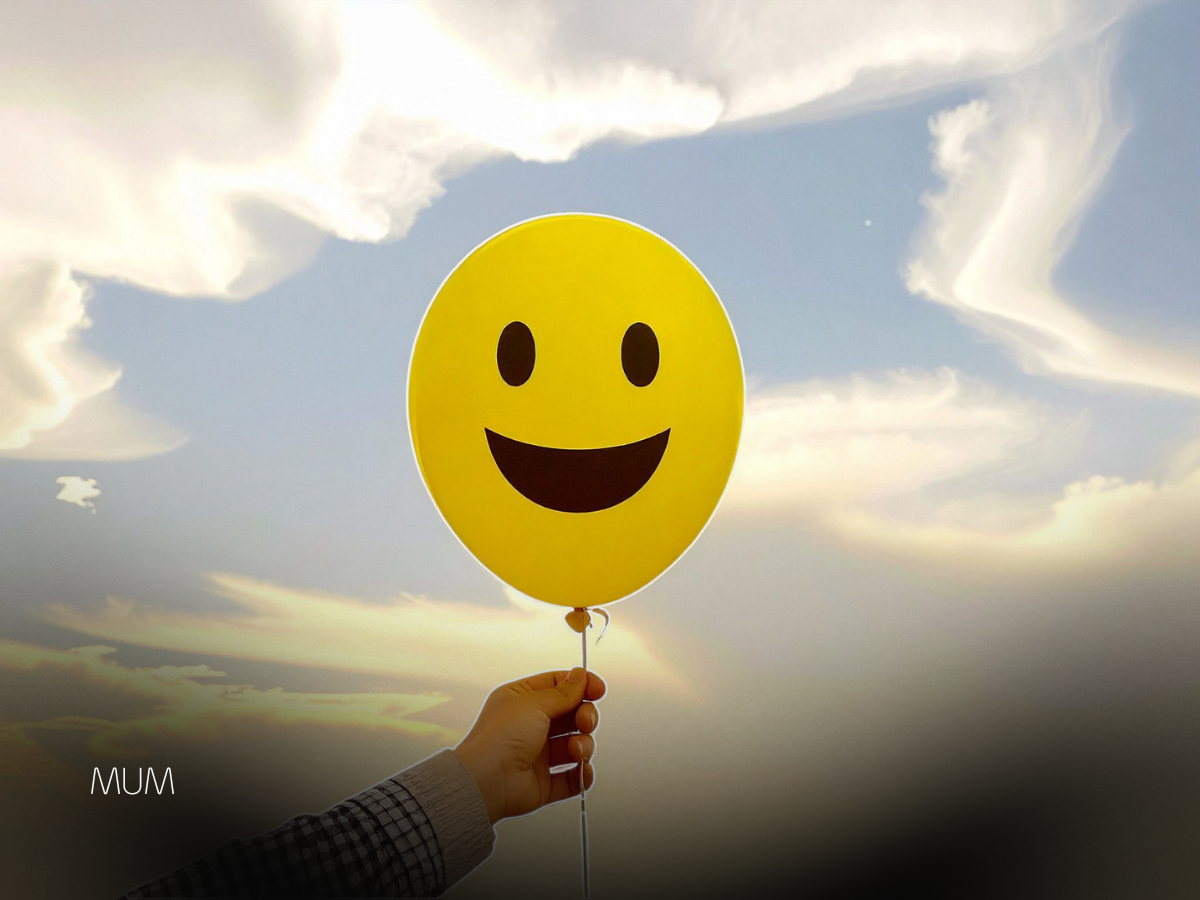
How an ancient survival mechanism makes us see "monsters" in the dark and "smiles" on cars.
Have you ever looked at the front of a car and felt like it was "smiling" at you? Or perhaps you’ve stared at a marbled bathroom tile until a swirling pattern transformed into the distinct profile of a dog? If so, you’ve experienced pareidolia.
Pareidolia is a specific type of apophenia, which is the general human tendency to perceive meaningful connections or patterns within random, disorganized data. While apophenia covers everything from gambling "streaks" to conspiracy theories, pareidolia is its sensory-based cousin—the spontaneous perception of images or sounds in random stimuli. Far from being a sign of a glitching brain, pareidolia is a fundamental feature of human cognition. It is a window into how our brains are "hard-wired" to prioritize social information above almost everything else.
The Evolutionary Roots of a Pattern-Seeking Mind
The term "pareidolia" stems from the Greek words para (meaning "beside" or "beyond") and eidōlon (meaning "form" or "image"). While humans have been seeing shapes in stars and spirits in trees for millennia, the psychological community began formalizing the study of this phenomenon in the late 19th and early 20th centuries.
Early research suggests that this isn't just a whimsical imagination at work; it’s a survival mechanism. Evolutionary psychologists argue that our ancestors lived in environments where the cost of a "false positive" (mistaking a bush for a predator) was much lower than the cost of a "false negative" (mistaking a predator for a bush).
Central to this is the Fusiform Face Area (FFA), a specialized part of the brain dedicated to facial recognition. Because humans are intensely social creatures, our brains are optimized to detect faces in a fraction of a second. This "hyper-active" face detection system is so sensitive that it often triggers even when no face exists, leading us to see eyes, noses, and mouths in burnt toast or cloud formations.


From Religious Miracles to Rorschach Blots
The historical trajectory of pareidolia shifted from the spiritual to the clinical during the 20th century. Before it was a psychological term, "seeing things" was often interpreted through a religious or mystical lens. Appearances of divine figures on walls or in nature were frequently hailed as miracles.
However, in the 1920s, Swiss psychiatrist Hermann Rorschach turned this natural tendency into a diagnostic tool. By showing patients ambiguous inkblots, he believed their "projections"—the patterns they chose to see—could reveal subconscious thoughts or personality traits. While the validity of the Rorschach Inkblot Test is debated today, it cemented the idea that what we "see" in the random says more about our internal state than the external object.
In the 1970s and 80s, pareidolia took a galactic turn with the "Face on Mars." NASA's Viking 1 orbiter captured an image of a rock formation that looked remarkably like a human face. It took decades of higher-resolution photography to prove it was merely a mesa shaped by erosion, but the cultural impact was massive, highlighting how easily our brains can be "fooled" by shadows and light on a massive scale.
Pareidolia in the Modern World: Design and Deception
Today, pareidolia is more than a curiosity; it is a tool used in marketing, industrial design, and user experience.
Automotive Design: Car manufacturers often intentionally design the "face" of a vehicle to look aggressive (angled headlights) or friendly (round headlights) to appeal to specific consumer demographics.
Architecture: Architects use pareidolia to make buildings feel more welcoming or "human-centric" by mimicking facial proportions in windows and doors.
Media and Memes: The internet has turned pareidolia into a form of collective entertainment. Subreddits and social media accounts dedicated to "Things with Faces" thrive because the experience of pareidolia is universally relatable.
However, there is an ethical side to consider. In the hands of a manipulator, our pattern-seeking nature can be exploited. This is often seen in financial "charting" or pseudo-science, where people are encouraged to see "trends" or "entities" in data that is purely statistical noise. When we are stressed or fearful, our brains are even more likely to find "patterns" that confirm our biases, leading to a feedback loop of misinformation.
Reflecting on Your Internal Projector
Understanding pareidolia is an invitation to practice intellectual humility. It reminds us that our perception of "reality" is actually a sophisticated guess made by our brains. We don't just see with our eyes; we see with our expectations.
To use this knowledge effectively, try these three reflections:
Check Your Biases: The next time you feel certain about a "pattern" you see—whether it's in a coworker's behavior or a political trend—ask yourself: Is the pattern actually there, or is my brain just trying to make sense of the noise?
Cultivate Wonder: Pareidolia is a gift of the imagination. Finding a "dragon" in a cumulus cloud is a reminder of the brain's incredible creative power. Don't be afraid to lean into the whimsy of it.
Recognize Deception: Be wary of those who claim to see "hidden truths" in complex, random systems (like the stock market or conspiracy theories). Remember that the human brain is a pattern-making machine that sometimes struggles to accept that some things are simply random.
By recognizing the "face in the clouds," we can better appreciate the complex, protective, and often poetic ways our minds try to make sense of a chaotic world.
Keep Going!
Check out these related posts